Game Designer (team)
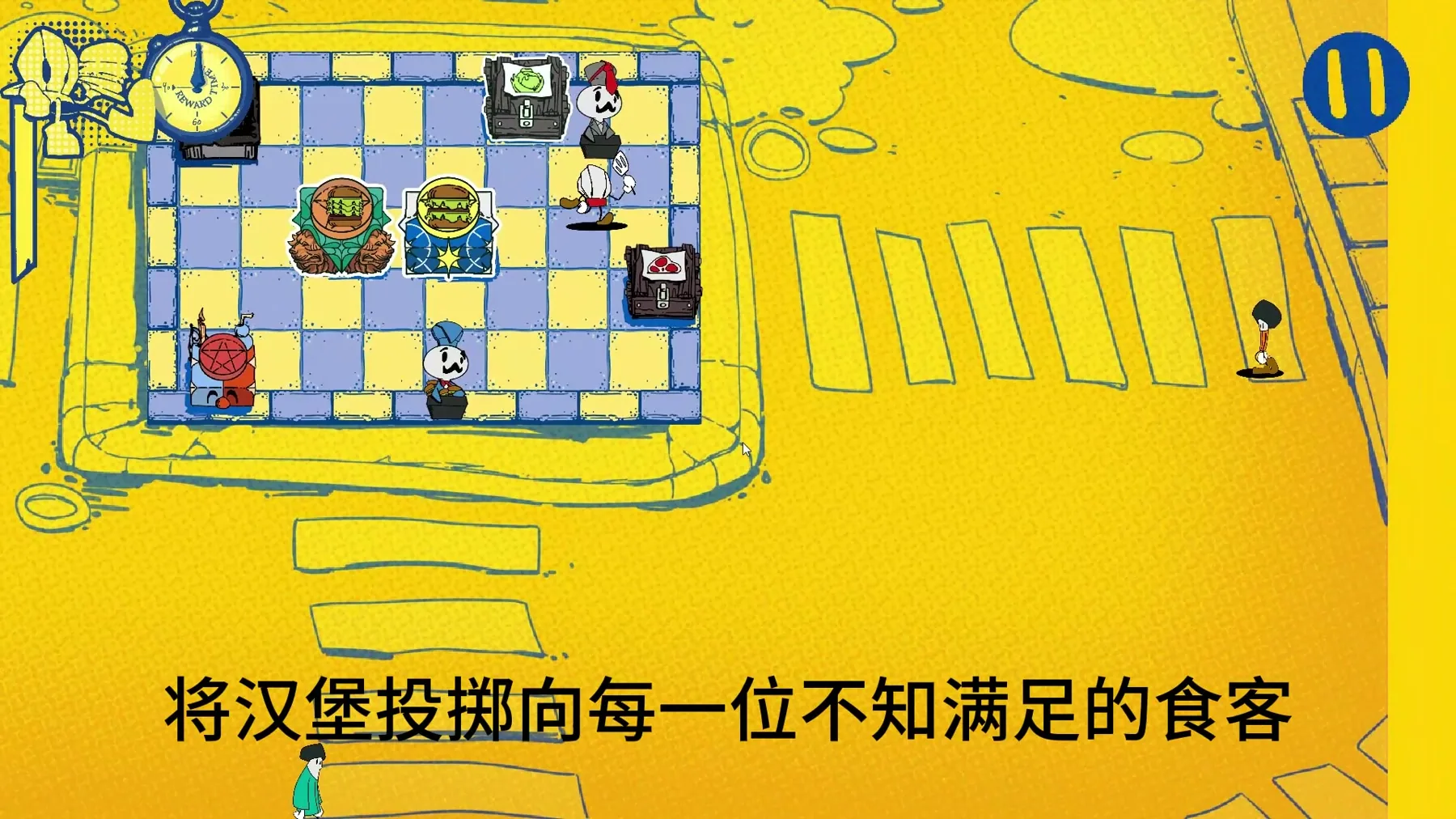
2D Strategy · Light Roguelite · Tower Defense / Competition project · Windows build
Burger Guardian
BURGER GUARDIANRearrange a restaurant into a production line and defensive position. Combine ingredients into weaponized burgers and adapt the layout after every reward.
ELEVATOR PITCH
Rebuild the restaurant while producing burgers as ammunition; let each reward reshape the next defence.
Rearrange a restaurant into a production line and defensive position. Combine ingredients into weaponized burgers and adapt the layout after every reward.
CORE GAMEPLAY
What does the player do?
Burger Guardian is a 2D strategy tower-defence game made by a five-person team. Ingredient crates, workstations and waiters occupy grid cells, so pathing and firing coverage compete for space.
Ingredients define burger properties: damage, speed, penetration, slow, burn or splitting. Workstations limit recipe capacity and production speed, turning each burger into both ammunition and a build choice.
Twelve waves escalate from one attack direction to three. After each wave, players choose one of three rewards; clearing within 90 seconds improves the chance of higher-rarity options.
Plan
Rearrange stations and routes
Collect
Choose ingredients for the need
Cook
Build burgers with different properties
Defend
Throw manually or supply waiters
Grow
Choose a reward after each wave
DESIGN HIGHLIGHTS
What should be remembered quickly.
The restaurant is the battlefield
Production paths and defensive coverage share the same limited grid.
The burger is the weapon
Ingredients combine numerical properties with special effects, making recipes part of the build.
Efficiency drives growth
Fast clears increase reward quality and link execution to long-term construction.
Directions reprice the layout
New attack angles invalidate comfortable paths and force continuous rearrangement.
Genre
2D strategy / light roguelite / tower defence
Platform
Unity / PC / Windows
Team
5 people: 2 designers, 2 artists, 1 programmer
Restaurant
12 × 7 grid / one cell per component
Level scope
12 waves / two rounds / max. 2 minutes per wave
Growth
Ingredients, stations and waiters / four rarities
Player roles
Manual throwing / automated waiter defence
My work
Gameplay design, rule breakdown and documentation
DESIGN BREAKDOWN
Design question
How can tower-defence placement remain active after combat begins, while the player still participates directly?
Restaurant space
Every station occupies one cell and can be moved, tying path length to firing coverage.
Recipe system
Stackable stats and one-time traits combine into burgers with penetration, slow, burn and split effects.
Production system
Workstation capacity and speed define recipe complexity and throughput.
Automated defence
The player can throw burgers directly or supply waiters with different ranges and attack speeds.
Growth structure
Three-choice rewards expand the restaurant; declining a reward restores health.
LEVEL DESIGN
Twelve waves organised by attack direction and clear time
Two rounds of six waves escalate from one direction to three, then close with a boss. Direction changes reprice movement and coverage; clear time connects performance to reward quality.
Initial layout
Build a production line from basic components
Waves 1–2
Learn collection, cooking and throwing
Waves 3–4
Two directions test routes and coverage
Wave 5
Three directions split defensive resources
Wave 6
Two directions and a boss form a checkpoint
Round two
Use the completed build for the final defence
Direction creates pressure
Difficulty grows by changing approach angles, not only by adding health.
Two minutes is a hard ceiling
Survivors carry into the next wave when the timer ends.
Fast clears improve rewards
Clearing within 90 seconds raises the chance of rare choices.
The boss tests throughput
Summoned diners force sustained production while focusing a durable target.
Rewards reshape space
Every new component occupies a cell and therefore requires a new route.
Declining is also a choice
A reward can be exchanged for restaurant health when the build is already complete.

Level-design material 01

Level-design material 02

Level-design material 03

Level-design material 04
MY CONTRIBUTION
Game Designer (team)
- Defined the restaurant-layout, production and throwing loop with the design team
- Structured relationships between ingredient effects, workstations and waiters
- Designed the 12-wave directional escalation, timing rules and boss pressure
- Contributed to rarity tiers and three-choice rewards
- Co-authored the design document and competition presentation
Contribution: Approx. 50% of design work (2 designers). This portfolio presents an edited project summary; source files are not public.
SCREENSHOTS
Playable results and key scenes.
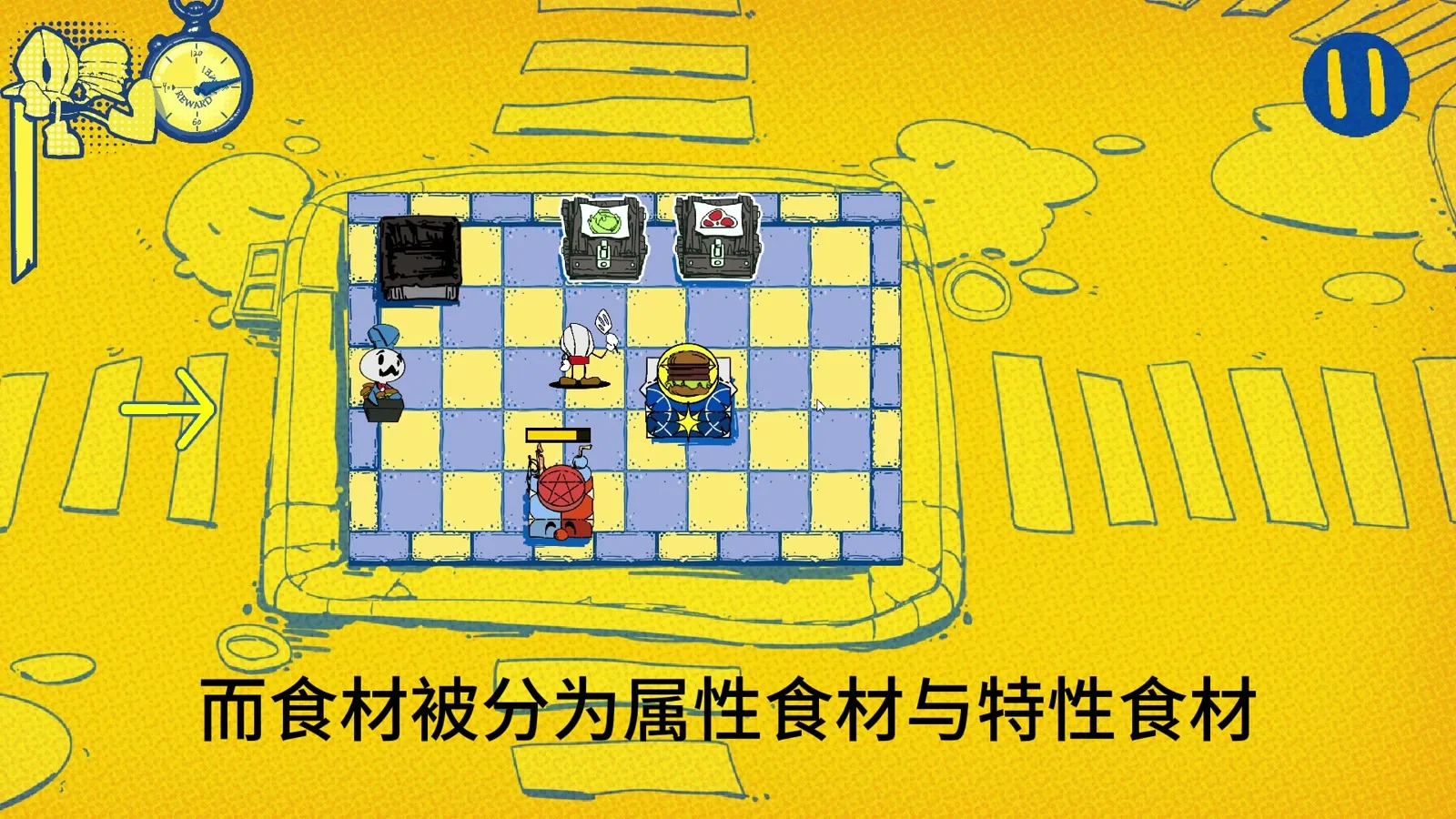
Gameplay screenshot 01
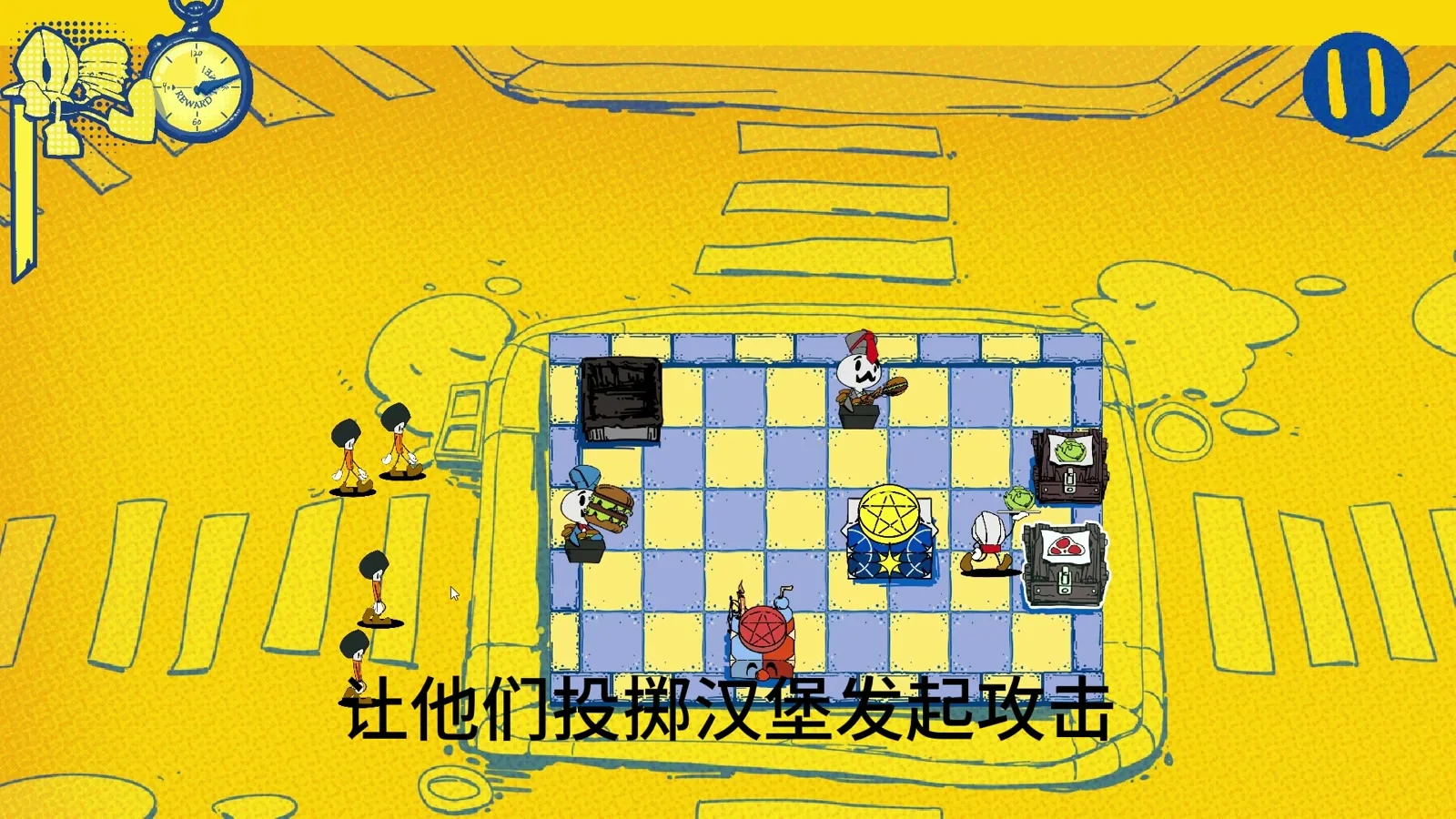
Gameplay screenshot 02
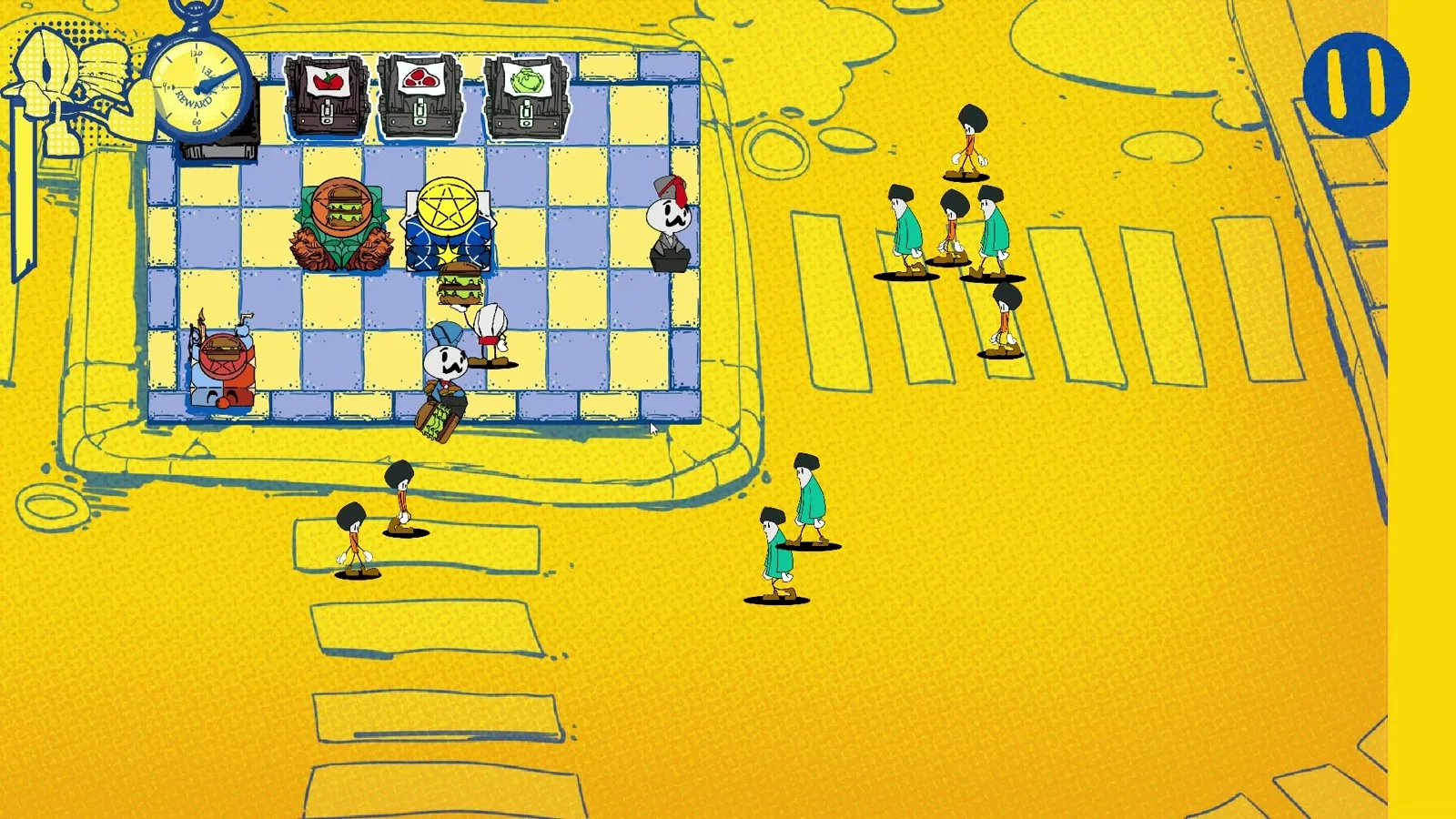
Gameplay screenshot 03
GIF / MOTION
Motion material to be added.
The full gameplay capture demonstrates the principal controls and system flow.
Open the full project presentation+
FULL PRESENTATION
The pressure of a zombie-survival scenario is translated into a restaurant defence: an endless crowd approaches while food, space and the defensive line must remain under control.
Rubber-hose animation uses exaggerated limbs, strong silhouettes and a vintage cartoon tone to make the conflict playful but tense.
Players who enjoy tower defence, light roguelites, spatial planning and recipe combinations.
Designed for individual desktop play, where the player can concentrate on increasingly demanding waves.
Features / FEATURES
Restaurant production meets tower-defence placement
- Continuously rearrange and customise the restaurant layout.
- Combine ingredients into burgers with different base values and special traits.
- Throw burgers directly or hand them to waiters for automated attacks.
- Choose one of three random rewards after each wave to expand the restaurant.
- Survive twelve escalating waves arriving from changing directions.
Controls / CONTROLS
Move, cook, throw and carry
- W A S D
- Move the character
- E
- Take ingredients, cook burgers and supply waiters
- Left mouse
- Throw the burger being carried
- Q
- Carry and reposition restaurant components
Ingredient crate
Provides ingredients; each one changes a base value or adds a special property.
Workstation
Turns ingredients into weaponised burgers; capacity limits recipe complexity.
Waiter
Accepts burgers and automatically throws them at diners inside its range.
Bin
Disposes of unwanted ingredients or burgers so mistakes do not occupy the workspace.
Waves & Rewards / WAVES & REWARDS
Efficiency changes the quality of the next growth choice
- Twelve waves approach the restaurant from changing directions.
- Each wave lasts at most two minutes and ends with one choice from three random rewards.
- Rewards include ingredient crates, workstations and waiters across four rarity tiers.
- Clearing within 90 seconds increases the probability of high-rarity rewards.
TEAM
A playable build made by a five-person team
Game design
Co-designed the systems, rules and design documentation.
Game art
Created character, environment, interface and visual direction.
Programming
Implemented gameplay systems, interactions and the playable build.
LINKS
Project materials and playable builds.
Open external Burger Guardian material on Aliyun DriveView design document↗Baidu Netdisk: 李军威Demo.zip · access code zrinView demo↗
After opening a cloud drive link, check the filename and access code shown above.